Spasticity or a spastic movement pattern

Spasticity or a spastic movement pattern

What is the problem, and what should we do about it?
Well, that depends on how we understand and define a symptom.
Today, we often talk about “spasticity” as if it is something in itself — almost like a muscle or a part of the skeleton. But there is no “spasticity organ.” Instead, we need to talk about a spastic movement pattern — a way of moving that occurs when a person lacks motor control.
Why should we talk about a spastic movement pattern? Because it changes the way we think about intervention — and can lead us towards very different, and better, approaches.
A spastic MOVEMENT PATTERN in the legs resembles the stepping pattern of a newborn baby when you hold the baby upright: the legs cross, the baby stands on the toes, and there is a lack of hip extension and weight-bearing through the whole foot.
Just like the newborn baby, children with a spastic movement pattern need to change, develop and improve the way they move.
This shifts our focus towards improvement and towards striving for normal motor ability. The child needs to learn what is missing: how to bear weight, extend the hips, externally rotate the legs, and much more.
Many current interventions do not address the actual problem — the movement pattern itself.
Botox weakens the child — it affects muscle strength. We do not want to weaken children; we want to make them stronger.
Rigid ankle-foot orthoses reduce loading and restrict joint movement. We want to increase loading and increase joint mobility.
Passively moving the legs of a child who is lying down and assessing “spasticity” tells us little about the child’s movement pattern in standing. It assesses resistance to passive movement without the influence of gravity — not what the movement pattern looks like when the child is actively moving under the influence of gravity.
If many of the interventions commonly used today were applied to typically developing children, they would impair their motor function.
We create a sense of “threat” that things may become “even worse” unless we lock the foot or weaken the muscle.
But what happens if, instead, we think about the movement pattern?
What if we aim, in every possible way, for improvement, learning and successful performance of movement — and through this, work towards normalizing the movement pattern?
If I learn the movements that I initially cannot perform, the spastic movement pattern decreases — and may even disappear.
There may still be resistance when my leg is moved passively.
But what does that matter if I can walk normally?

What I have learned from clinical practice is that walking aids can either reinforce or reduce the spastic movement pattern, depending on how they are designed and adjusted.
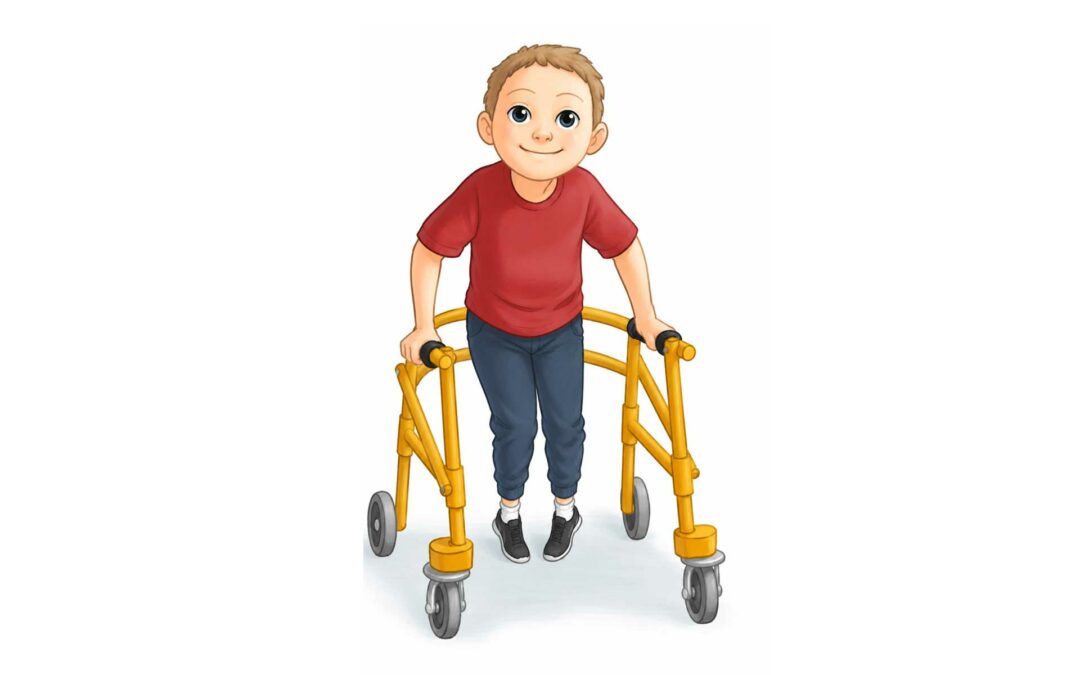
Just the other day, I saw a young boy who had walkers of different sizes at home and at preschool. His walking pattern was significantly better with the smaller walker. When we reduced the distance between the handles on the larger walker, his movement pattern immediately improved. It can improve even further when the child is able to walk in a fully upright position.
So, in addition to practising the movements the child cannot yet perform — such as walking backwards, standing with the feet turned outwards, and actively pushing the feet into the floor — we also need to think carefully about walking aids and how they influence the child’s movement pattern.
We also need to assess and analyse the movement pattern itself.
What movements can the child perform? To what extent? Which movements can the child not yet perform? How can I create tasks and activities that encourage those missing movements to emerge?
The earlier we start, the better.
We know how children learn to walk and gradually develop control of their movements. For children with disabilities, we should use that knowledge from the very beginning — creating appropriate tasks, opportunities for learning, and well-designed assistive devices that support the development of movement.

And we need to understand that the walking aid itself is part of the training. An assistive device is not neutral. Depending on how it is designed and adjusted, it can either reinforce the child’s spastic movement pattern or create the conditions for a more functional and more developed walking pattern.

That is why it is not enough to ask: Can the child get around using the walking aid? We also need to ask: How does the walking aid make the child move — and is that the movement we want the child to learn?

Does this way of thinking make sense to you?
Questions and answers to our political parties/

Questions and answers to our political parties/

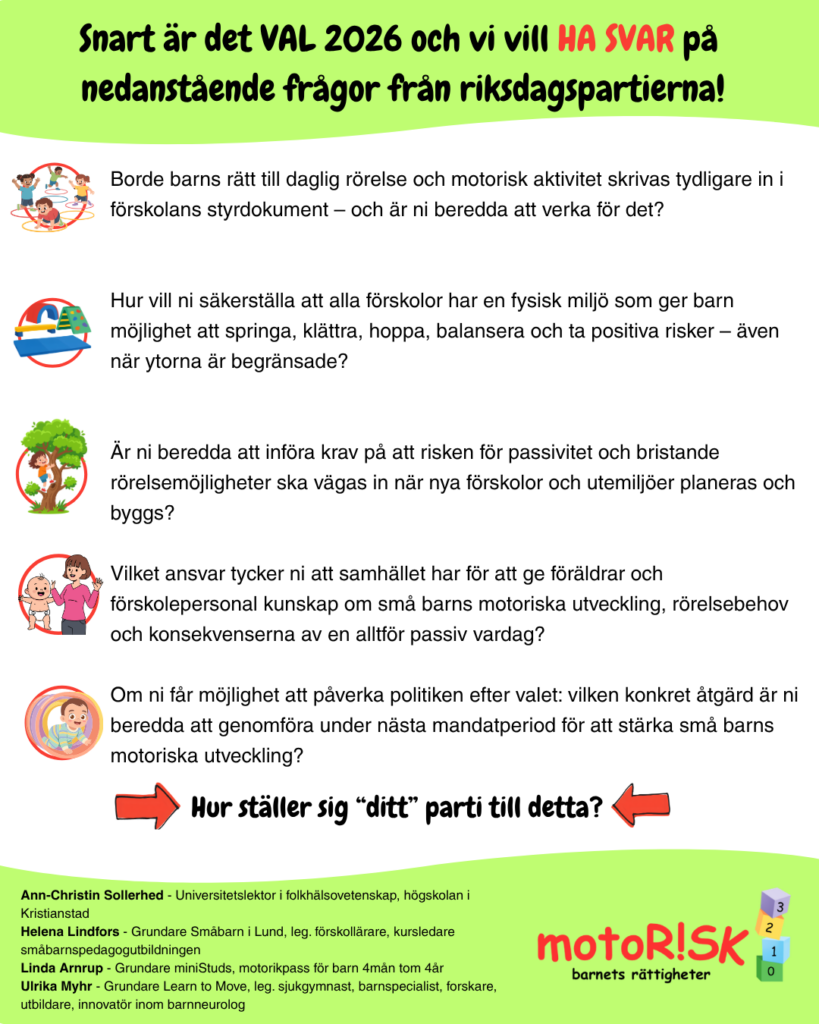
With an election approaching, the Motorisk group — where Learn to Move collaborates with researchers and professionals working with children’s motor development in preschool — wants to highlight the importance of creating good environments for movement and physical development in preschools.
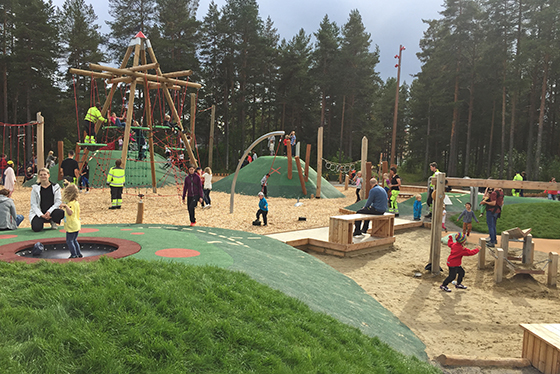
Children need space to run and move, opportunities to take appropriate risks, and environments that allow them to challenge themselves physically. There is a great need for this.
If you would like to raise these issues with your local or national politicians, please feel free to share them.
In well-designed environments, children become active and independent — they play, explore and learn. In poor environments, passivity is allowed to flourish.

https://www.learntomove.se/wp-content/uploads/2026/08/Valfragor-A4-pdf.pdf

Collaboration and Training on Functional Sitting with Hepro

Collaboration and Training on Functional Sitting with Hepro

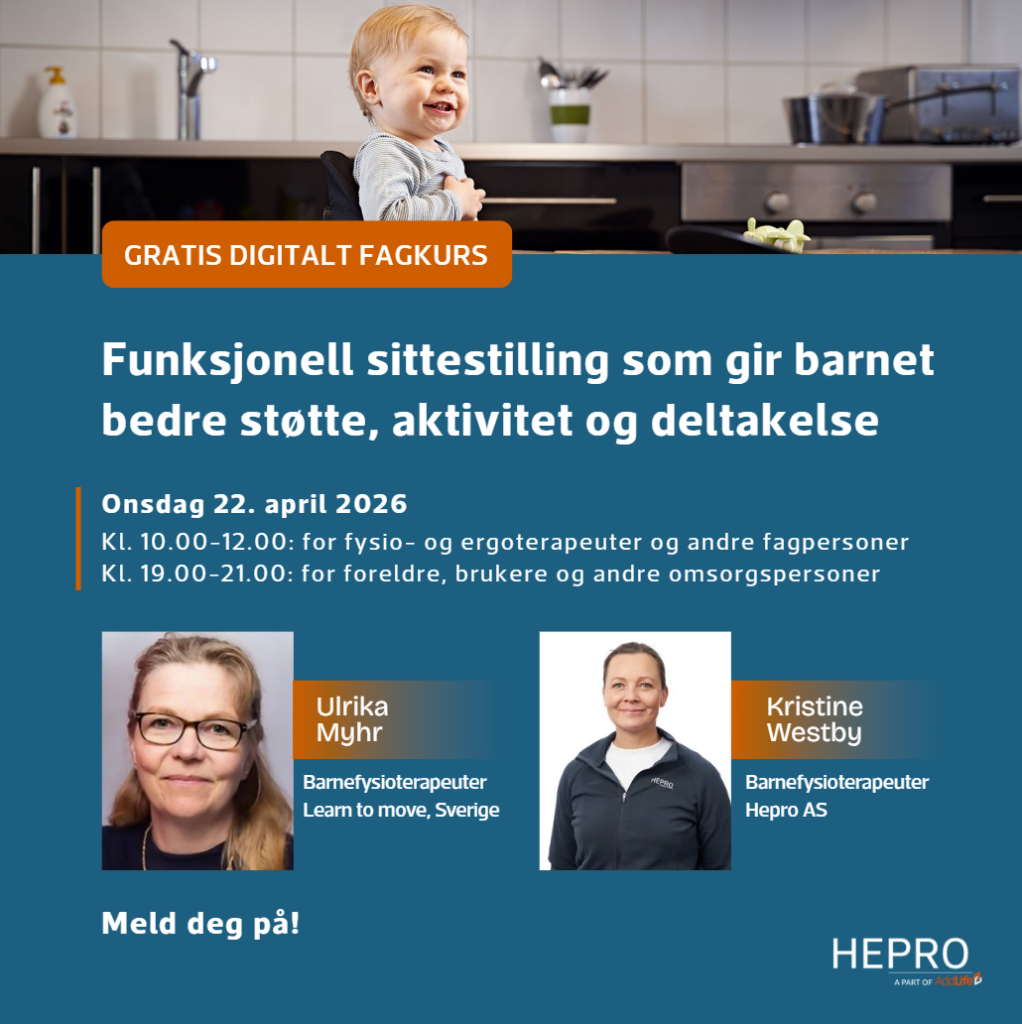
We are delighted to have started a collaboration with the Norwegian assistive technology company Hepro. We share many of the same ideas about the need for functional, active assistive devices that aim towards normal function for children with disabilities.
On 22 April, Ulrika Myhr and Kristine Westby will give a lecture on functional sitting and positioning.
The daytime session, 10:00–12:00, is aimed at professionals, while the same lecture will be offered to parents in the evening, 19:00–21:00.
Registration links in Norwegian are coming soon!

Date and time: Wednesday, 22 April 2026

10.00–12.00 am for physio- and occupational therapists or other professionals

Påmelding: https://events.teams.microsoft.com/event/04d306fa-c1ef-43ff-9d6e-d77172946d3e@5d7315a4-3d5c-4eef-901c-2689e9fd7078

7.00–9.00 pm : for parents, patients or other care persons

Påmelding: https://events.teams.microsoft.com/event/86076ed8-951f-432e-b585-9ce723a257f0@5d7315a4-3d5c-4eef-901c-2689e9fd7078

Prepare for getting concrete tips that you can use in every day situations.

Open Letter to Regional Politicians in Halland

Open Letter to Regional Politicians in Halland

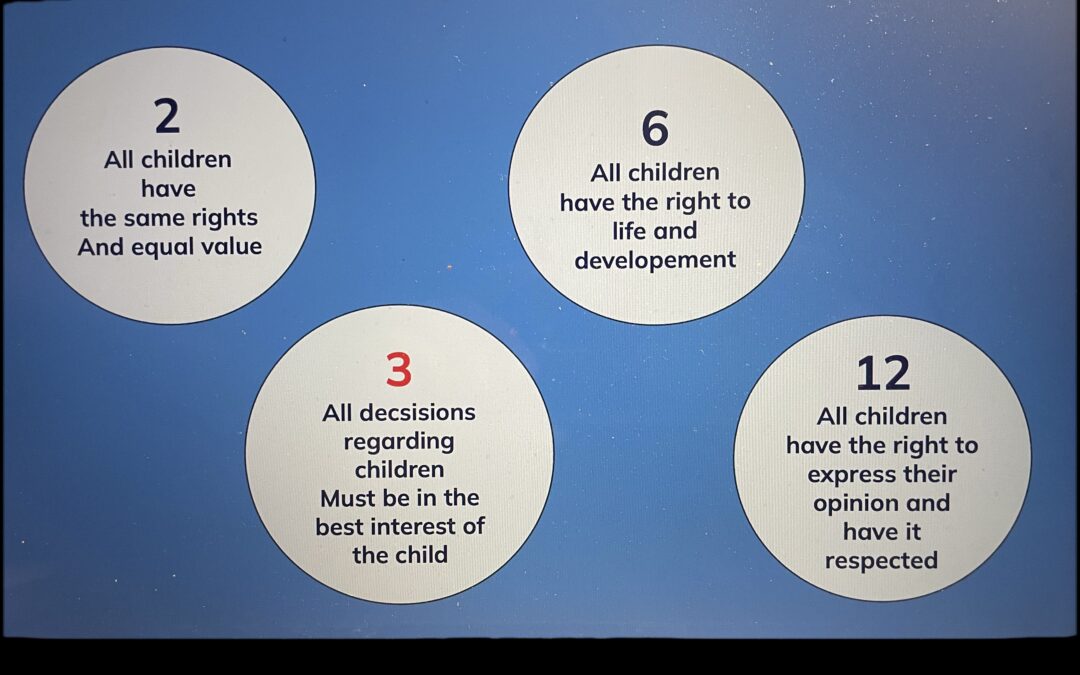
The Convention on the Rights of the Child is law in Sweden, and the image shows its core pillars, such as the right to development and that the best interests of the child must be considered in all decisions concerning children. This open letter is addressed to Region Halland, which denied the assistive device Learn to Walk on the grounds that it is a training aid costing more than SEK 15,000. Despite this, the child was allowed to borrow the device and now walks independently.
Region Halland is not alone — several regions have the same policy, and all are violating the law. The absurdity lies in rejecting a “win-win situation.” When a child learns to walk, it creates fantastic opportunities for participation in play and activities, while also generating major economic savings for the region through reduced costs for assistive devices, personal assistance, and healthcare.
Much more could be said about this, but first a call to everyone who works with and for children with disabilities to stand up for children’s rights — heads of habilitation services, assistive technology managers, regional politicians — work together to highlight this: do it again, and do it right. You can read the open letter here

Training in motor development for preschool staff has begun and will continue.

Training in motor development for preschool staff has begun and will continue.

So far, the Motor Development for Preschools course has been held twice. It has been incredibly rewarding, and the evaluations clearly show that there is a great need for this kind of training.
One of the aims is to increase understanding of the important role preschools play today in helping children grow into strong, happy and confident individuals. So much happens during the preschool years that lays the foundation for a child’s self-image and self-esteem.
Children need challenges to solve. They also need opportunities to take risks, test their limits and sometimes fail. Preschool teachers need the knowledge and confidence to explain to parents why this matters — and how avoiding one risk may create another.
If children are never allowed to test their limits, we may instead increase the risk of passivity, poorer mental well-being and a lack of confidence in their own physical abilities.
Creating play environments that meet children’s developmental needs at different ages is fundamental. When the environment provides the right opportunities and challenges, children can become increasingly independent in their play, movement and exploration.
The next course will be held on 24 April.