Developmental Coordination Disorder (DCD) affects approximately 6% of children. We know that it can affect many areas of a child’s life — especially if the child does not receive appropriate support and develop self-awareness. DCD affects participation in play and activities, everyday functioning and learning, as well as the child’s self-esteem. But what happens when you are an adult? There is a lack of both follow-up and knowledge in this area. What we do know is rather discouraging, as DCD can affect many aspects of a person’s life and the choices they make. Christopher Gillberg and Elisabeth Fernell, paediatric neurologists, together with Ulrika Myhr from Learn to Move, have initiated a collaboration to follow up approximately 300 children diagnosed with DCD and examine their outcomes into adulthood. The project is still in its early stages, and more people will be involved as it develops. We hope that this project will increase our knowledge of DCD and improve care and interventions, helping to achieve better long-term outcomes. Stay tuned for updates!
On March 10-11, a course about Developmental Coordination Disorder (DCD) was held, bringing together participants from across the country. The course combined both theoretical and practical learning, focusing on how we can support children’s development, help them be understood, and foster a sense of physical self-esteem There were many insightful questions and discussions about motor skills and seeing the whole child. It is well known that DCD is linked to mental health challenges, particularly reduced physical self-esteem. However, today we are also seeing a growing number of children who “develop” DCD and attention disorders early in life—they exhibit passivity from infancy through preschool years. Those with long experience in healthcare and education are witnessing these changes; the classroom looks different today! This calls for a major shift—a structured approach to assessment, intervention, and long-term follow-up. Innovative solutions are needed, and physiotherapists, occupational therapists in school healthcare, and PE teachers as special educators can play a crucial role in addressing these emerging needs.
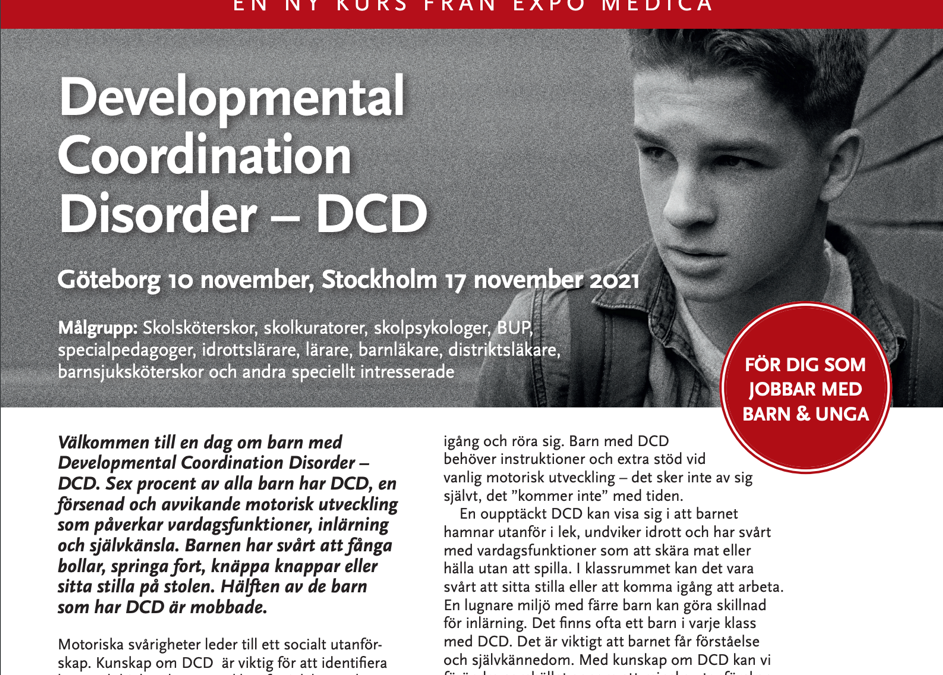
The education company Expo Medica is organizing a full-day training for schools, child psychiatry, and child healthcare on DCD in the fall of 2021, where Learn to Move is involved as a lecturer. The need for knowledge about DCD is significant – it fundamentally impacts motor development but also self-esteem, participation in play and recreational activities, as well as learning. The course takes place in Gothenburg on November 10th and in Stockholm on November 17th.
To all working with children in healthcare, preschool, school, or leisure, a basic course on Developmental Coordination Disorder (DCD) is offered. In the course, you will learn about the causes and impacts on both motor skills and learning in daily functions.
Kurs tema
Developmental Coordination Disorder (DCD) – symptoms, causes, and interventions.
In the training, you will, among other things, learn
Basics of motor development and how they are affected in DCD.
Symptoms of 2 different types of DCD.
How do we improve motor skills in children with DCD?
Assessment and diagnosis.
Impact on everyday functions and learning.
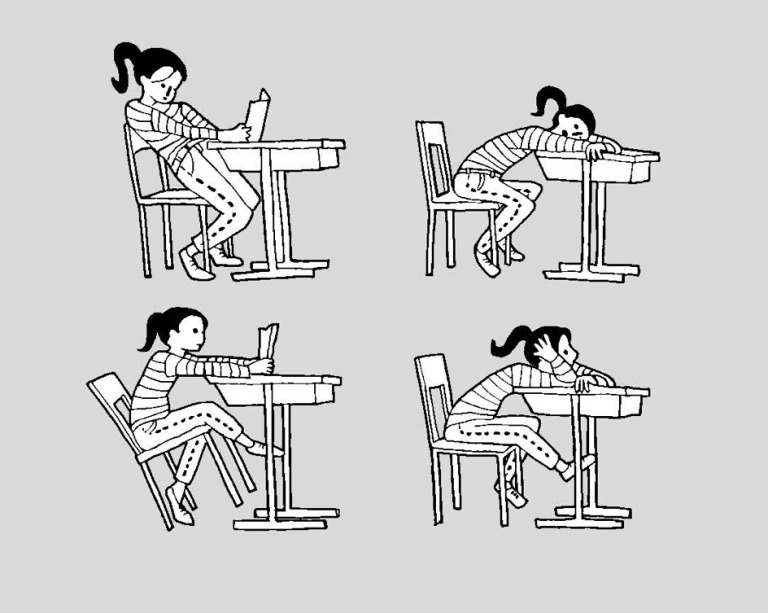
School situation – ability to sit still, need for movement, physical education and crafts, grades.
Participation in leisure activities.
Impact on emotions and self-esteem.
Prognosis for DCD
Target audience.
Everyone working with children in healthcare, preschool, school, or leisure, for example. Physiotherapists, physical education teachers, special educators, school nurses, teachers, and parents.
Course instructor
Ulrika Myhr, specialist in pediatric physiotherapy with extensive experience working with children with DCD, author of the book “Sittande barn” (Sitting Child).
Date & location
Friday, Saturday, February 5-6, 2021, 9-17, registration from 8:30. The course takes place at Capio Artro Clinic, Valhallavägen 91 in Stockholm. If COVID-19 restrictions prevent the course, it will either be held digitally or postponed to a later date.
To go to the registration page, click here: DCD-course.
On February 12th at 22:00, you can watch the program about Liam on SVT 1 in Super Kids. Liam has DCD and wants to learn how to ride a bike – there is a lot happening when you learn something you didn’t think you could, and that realization creates fantastic opportunities to learn even more!
If you want to watch the program on UR Play, you can click here.
It’s pleasing that knowledge about DCD is in demand in schools. During the School Doctor Days in Gothenburg on January 30-31, I will be lecturing about DCD. In addition to DCD, many interesting topics related to children’s brains and physical and mental health will be discussed.
The body needs to be integrated into the school, and understanding how motor skills, mental health, and learning are interconnected is highly relevant. Poor motor skills often lead to exclusion – and that is among the worst things that can happen to a child. Understanding and assistance can lead to a sense of belonging, which is crucial for well-being.
Vi använder cookies för att se till att vi ger dig den bästa upplevelsen på vår webbplats. Om du fortsätter att använda denna webbplats kommer vi att anta att du godkänner detta.